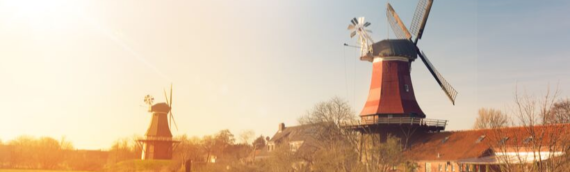

The unique features of Frisian languages

The unique features of Frisian languages

Frisian is, in fact, a group of Germanic languages spoken by about 500 thousand people in the Netherlands and Germany. They are part of the Anglo-Frisian group but are not mutually intelligible with English. Depending on the location, Frisian languages have been influenced by Dutch, German and Danish. Division of Frisian languages West Frisian is the most common one. It is an official language of the Friesland province in the Netherlands but is spoken in several other places as well. Its insular varieties are often unintelligible on the mainland. North Frisian is a language of many inhabitants of the Nodrfriesland district in Germany and a few islands. It has several strongly dissimilar dialects. The third one is known as Saterland Frisian and is spoken in one place only, the municipality of Saterland. The terrain is surrounded by marshes, which helped to avoid strong pressures of the German language. Interesting facts

Read more

Peculiarities of the Faroese language

Peculiarities of the Faroese language

Faroese (pronounces as /?f??ro??i?z/ or /?f?ro??i?z/) is the mother tongue for over 70 thousand people, mostly concentrated on the Faroe Islands and Denmark. Just as Icelandic (see our entry), it is a Germanic language derived from Old Norse. A bit of history Old Norse was still the language on the Islands at the beginning of the 10th century. However, the influx of Irish, Orkney and Shetland settlers in the coming years began to affect the language. Even contemporary Faroese has a significant number of words that have a clear Celtic origin. At the end of 14th century, it stopped being a written language as a result of a union with Denmark. For almost 300 years, Faroese was used only in its spoken forms in arts and daily interactions. The first decades of 19th century brought a change as first publications with Faroese started to appear. The first one was the

Read more

The challenge of technical translation

The challenge of technical translation

Technical translation may pose a challenge for professional translators. In order to receive the best outcome, there are lots of strategies available for us, which are to be presented in the following article. What to do When facing a technical translation, there are a few solutions we may come up with. One of them, with the most long-lasting effect, is education within the given technical field. Philology graduates might consider this idea, as it would give them the skills necessary for providing translations the target needs, and, perhaps, allow for increasing the rate due to the high level of translations they can provide. However, we are not always in a position to make such big changes, which is why there are other strategies to come. Another idea worth applying is the use of technical dictionaries. As we know, the Internet provides us with online dictionaries, yet not all of us

Read more